Can a blocked vent stack cause slow drains even when there is no clog?
Yes. If a sink gurgles, a toilet burbles when another fixture drains, or water moves slowly with no clog anywhere, a blocked vent stack is a likely cause. The vent is the pipe that runs up through the roof. It lets air in behind the water so drains flow freely. When it is blocked, the drain pulls against a vacuum, and the water crawls out of the fixture.
Common causes are leaves, a nest or debris at the roof opening. Inside the wall, a vent can also collapse or fill with scale.
A vent problem often shows up on several fixtures at once. They drain, just slowly, and they gurgle. A clog usually stops one fixture. If every drain in the house is backing up, that is a main line job, not a vent.
Safe homeowner check: listen for gurgling, look at the roof opening from the ground, and run each fixture one at a time to see which ones act up. Do not climb onto the roof yourself.
Stop running water and call now if sewer odor is strong indoors, or a toilet or floor drain is bubbling up.
A cable machine run down from the roof opening clears most vent blockages. If it keeps coming back, a camera inspection shows whether the pipe is damaged. Cost depends on roof access and how far the blockage sits.
Expert Plumbers Co is a referral service. Call (380) 262-9173 and we will connect you with a plumber serving Adel, GA for Drain Cleaning.
Several things can make a vent problem worse or confuse the diagnosis. In cold climates, frost can close the roof opening as moisture freezes around the rim, so symptoms appear in winter and ease in spring. A common mistake is treating the gurgle with repeated plunging or drain chemicals, which does not touch the real cause and can leave caustic liquid in the trap. Another sign it is getting worse is a toilet that fills slowly after flushing or a trap that loses its water seal, because that lets sewer gas into the room. Older homes often have vents routed through cramped walls with long horizontal runs where debris collects, while newer homes may use air admittance valves under sinks that can wear out and stick. When you call, mention which fixtures gurgle and in what order, since that tells the plumber which branch to follow first.
The street sewer backed up into my house. What is a backwater valve?
Sewage came up through the basement floor drain, or a low toilet or tub gurgled and overflowed, during a storm or a heavy-use evening.
The usual cause is the municipal main in the street filling past capacity, called surcharging. With nowhere to go, the flow pushes back up the lateral and out of the lowest opening in the house.
A backwater valve, also called a check valve, is a fitting on the lateral or building drain with a flap that lets waste leave and shuts when flow reverses. It sits on the line ahead of the branches serving the lowest fixtures.
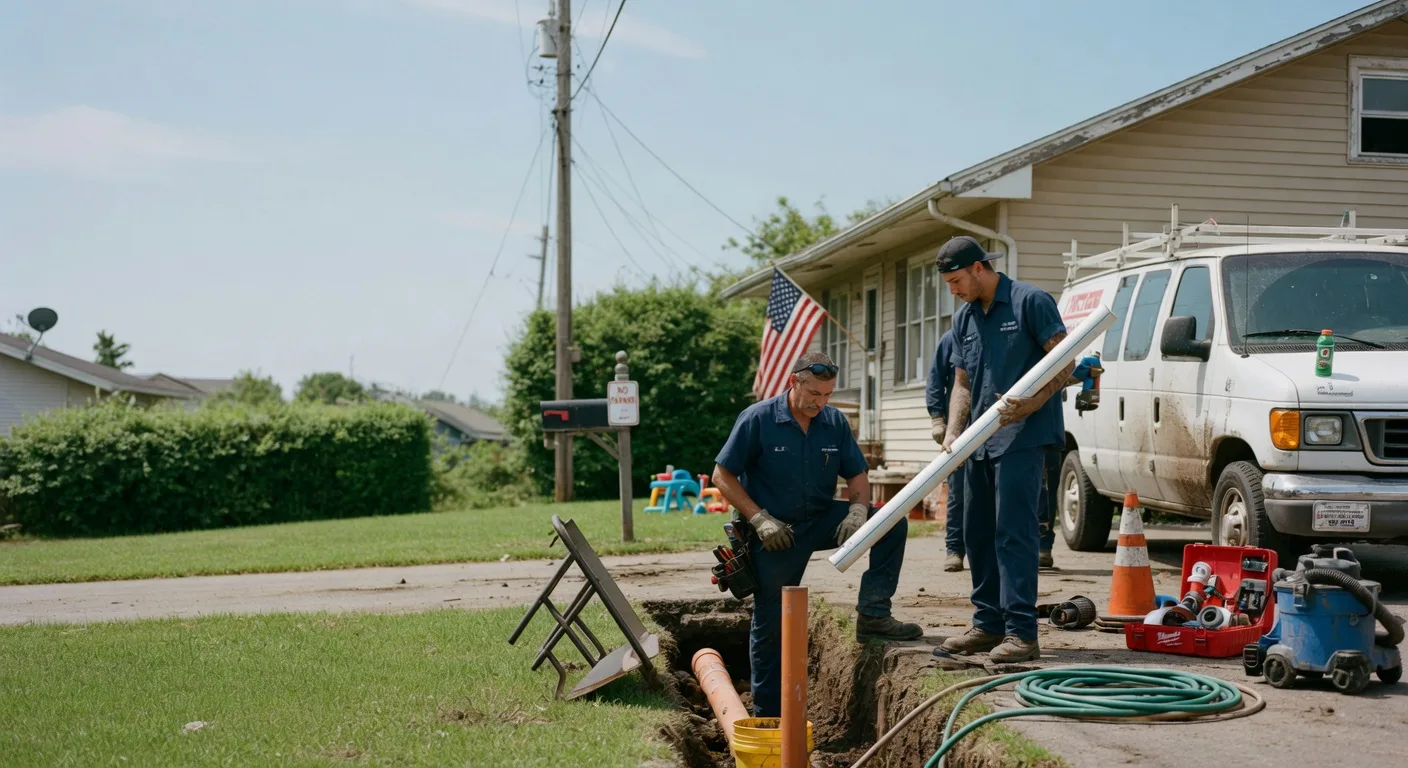
Fitting one is not a quick swap. It usually means opening the floor or digging to reach the pipe. What it involves depends on access, the depth of the line, the valve and materials, how much has to be opened up and restored, and whether a permit or code sign-off is required. Rules vary by area.
A valve does not fix roots at a clay joint or a bellied line holding water. It only stops reverse flow. A private line problem needs a camera inspection first, then a cable machine or hydro jetting depending on what the camera shows.
Street or private? Ask three things. Are the neighbors affected? Did it coincide with heavy rain? Is only the lowest opening backing up while upper fixtures drain normally? Yes to those points to the street main. Only your house, in dry weather, points to your own lateral.
Safe homeowner check: look at the neighbors and the forecast. Stop running water now: no flushing, washer or dishwasher. Keep people and pets out of contaminated water, and call.
Expert Plumbers Co is a referral service. We connect you with an independent local plumber in Adel, GA. Call (380) 262-9173.
After the cleanup, ask how the valve will be kept working. The flap and its hinge can be stopped by lint, grease and grit, and then it no longer seats fully. Most valves have an access cover so the flap can be looked at and cleaned, and that should be done on a routine, not only after a storm. Learn where the cover is and keep boxes and floor coverings off it.
One point catches people out. With the valve closed during a storm, your own household water has nowhere to go either. Showers, sinks and the washer will fill the line behind the flap, so keep water use low until the street main drops.
After any backup, the floor drain and the area around it need to be cleaned and disinfected. Porous materials that soaked up sewage, such as carpet pad and cardboard, usually have to be removed rather than dried.
We just built or remodeled and the drains are already slow. Why?
The plumbing is new, and the tub drains like an old one. Or the sink gurgles whenever the washer runs. New work should not do this, and the cause is usually in how the pipe was set.
Four causes come up. First, not enough fall on a horizontal run. Water needs slope to carry solids, and a flat run leaves them behind. Second, a vent that was never tied in or was capped. The line cannot breathe, so you get gurgling and slow flow with no clog. Third, construction debris left in the line: grout, drywall mud, thinset, sand. It sets hard on the pipe wall. Fourth, a trap arm run too long.
One slow fixture points to its own trap arm, slope or vent. Several fixtures slow together, or the lowest drain backing up, points to the main run, a debris plug or a vent problem.
Safe homeowner check: note which fixtures are slow and listen for gurgling. Do not climb onto the roof. Stop running water and call now if water or sewage comes up in a tub or floor drain.
A camera inspection is the right first step on new work. It shows a flat section, a ridge of hardened material on the pipe wall, or a vent that never connected. Repeat cabling just pokes a hole through the problem, and it returns. A cable machine is enough for a soft, loose blockage. Hardened cementitious debris often needs hydro jetting. Slope and vent faults need the piping corrected, and what that involves follows access, materials, how much has to be opened up, and any permit or inspection.
Expert Plumbers Co is a referral service. We refer homeowners in Adel, GA to an independent local plumber for Drain Cleaning and Emergency Drain Cleaning. Call (380) 262-9173.
Keep a record while the work is fresh. Photograph any open walls or trenches before they are closed, and write down the date the slow drains first showed up. If a builder or remodeling contractor did the work, the fault may be theirs to answer for. A written note from the plumber describing what the camera found, such as a flat section or hardened debris, helps far more than a general complaint.
Tell the plumber when the work finished, which fixtures were added and whether the main line was touched.
A common mistake is pouring strong drain chemicals into a new line. They rarely touch hardened grout or thinset, they can damage fittings, and they make later cabling or jetting unsafe for whoever handles it. Another is waiting for the problem to settle. Construction debris does not wash away. Ask whether any air admittance valves were used in place of a full vent, and whether local code allows them.
The furnace or air conditioner drains into my basement floor drain and now it overflows. Is that a drain cleaning job?
"The furnace drains into my basement floor drain and now it overflows." That is a common one, and it is a drain problem with two parts. The overflow can come from either end: the small condensate line, or the floor drain it empties into.
Condensate lines clog with algae and sludge. Once it blocks, water backs up at the unit or spills from the line onto the floor. Many systems also have a trap on that line, and the trap is the first place sludge collects.
The floor drain itself can be the problem. If it is slow or backs up when you run the washer or a tub upstairs, the cause is in the house drain: grease build-up, a bellied line holding water, or root intrusion at a clay joint further out.
One slow floor drain, with the rest of the house draining fine, usually means a local blockage in that branch. Every drain in the house backing up, or the lowest drain gurgling and rising while others run, points to the main line or a failed sewer lateral.
Safe homeowner check: Look at the pipe from the unit. Is water standing in the pan or trap? Pour a bucket of water into the floor drain and watch how fast it goes. Do not pour bleach or drain chemicals into the condensate line without knowing the unit's instructions.
Stop running water and call now if the floor drain is bringing up sewage or a sewer smell, other drains in the house are slow or gurgling, water is spreading toward electrical equipment or the furnace, or the overflow comes back soon after you clear it.
A cable machine is often enough for a plain clog in the floor drain branch. A condensate line is a different job: it needs flushing or clearing at the line and trap, and may need a cleanout fitting added. If the floor drain keeps backing up, a camera inspection shows whether the main line has roots or a belly. Hydro jetting is used when grease or scale coats the pipe wall.
Expert Plumbers Co is a referral service. We connect you with an independent local plumber in Adel, GA. Call (380) 262-9173.
Ask the plumber to check both the condensate line and the floor drain, and to explain which one failed. Ask whether the condensate should drain somewhere else, since rules vary by area on where it may discharge. Cost depends on access, the parts needed, how much has to be opened up or removed, and any permit or code requirement.
Our older house has a house trap, or running trap, in the basement. Why does it keep clogging?
Your basement drain backs up every so often, and each time someone points at the house trap and clears it again. In an older house that is a familiar story.
A house trap, also called a running trap, is a U-bend on the main drain near the foundation wall, with two cleanout plugs. It holds water to keep sewer air out. The trouble is that the dip slows the flow and gives solids a place to settle. Paper, grease, wipes and roots that pass through a straight pipe pile up in the bottom of the bend, so the trap becomes a frequent stoppage point.
Old lines make it worse. Scale in cast iron roughens the pipe and catches debris before it reaches the trap. Root intrusion at a clay joint outside sends fibres toward it. A bellied line downstream can hold water back so the trap never fully clears. Many traps were removed over the years, and local code on keeping or removing one varies.
One slow fixture is usually its own branch problem. If toilets, tubs, sinks and the washer all slow down together, or the floor drain bubbles, the trap or the main beyond it is the likely spot.
Safe homeowner check: Stop using water and look at the two trap plugs without opening them. Check whether the floor drain is holding water, and note which fixtures back up first.
Stop running water and call now if sewage is coming up from a floor drain or shower, if you smell sewage in the basement, or if a plug is weeping. Never loosen a trap plug under pressure, because sewage can surge out.
A cable machine is often enough to clear the trap itself when the stoppage is soft. Hydro jetting is the better choice when grease or scale lines the pipe on either side. A camera inspection is the right step when the trap keeps clogging, because it shows whether the real fault is a belly, a root-filled joint or a failing section further down.
Expert Plumbers Co is a referral service. We connect you with an independent local plumber in Adel, GA. Call (380) 262-9173.
Ask whether the trap can stay and be cleaned when needed, or be removed where code allows. The scope depends on basement access, the condition of the pipe on both sides, how much floor has to be opened up, and any permit or code requirement for changing the main.